
Every business has a phase when the founder stops being a bonus and becomes a requirement. Posts go live a day late because the founder hasn’t replied yet. A campaign waits for a free hour in the founder’s calendar. The brand’s tone of voice was never written down, so the team has to guess it every time. In the early days, founder-led marketing is a strength: speed, instinct, and customer knowledge drive early traction. As you expand, this founder-led marketing quickly becomes a scalability challenge, making the business harder to scale.
At TheDIco, we work with founders and marketing leaders at exactly this point. Here’s why it happens, how to spot it, and how to scale growth while keeping the founder’s voice.
Why Does Founder-Led Marketing Become a Bottleneck?
As the business grows, founders hire someone to reduce their own involvement. But the new person doesn’t hold any decision-making authority, so every time he finishes work, he goes to the founder for approval. There’s a second layer: the fractional CMO at TheDIco. Maran says it clearly: your presence trains people to stop deciding. If you’re around, the team brings you the call and thinks, "he’s there to decide, so why should I take the risk?" If your new hire still has to come and ask you, you haven’t removed the bottleneck. You’ve just given it one more person to wait in line.
This is the same mistake we wrote about in the context of hiring generally: most founders do not hire the wrong person. They hire the right person for a problem a new hire can’t solve alone.
Founder Voice vs. Approval: What to Delegate
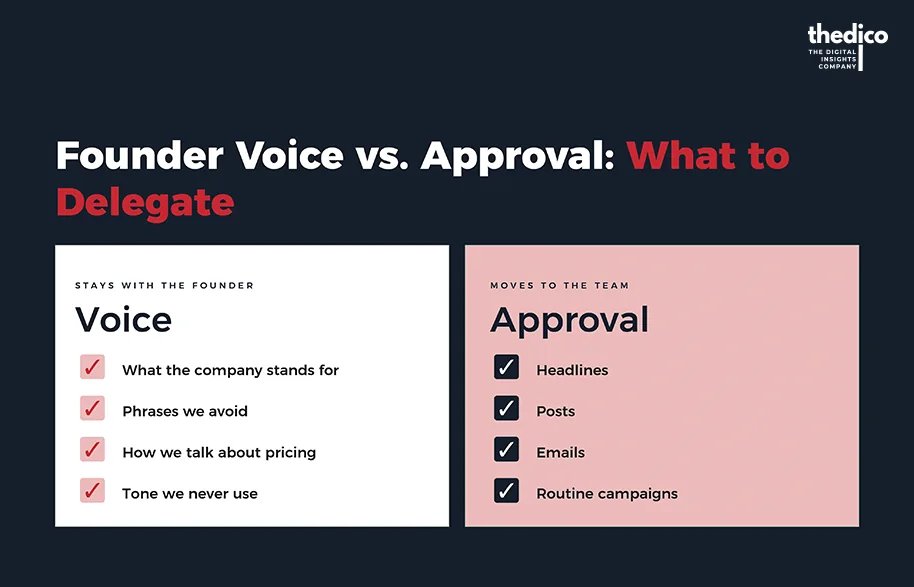
A founder is responsible for maintaining the company’s voice, but that does not mean he will review every headline before it goes out. These two things often get mixed up, so taking one back feels like leaving the other.
As a founder, your judgment needs to carry over when you delegate. Write down the reasoning once: the phrases the company avoids, how it talks about pricing, the tone it never uses. Then your team can follow it without you checking every draft. That’s what a content system does.
Signs Founder-Led Marketing Isn’t Working
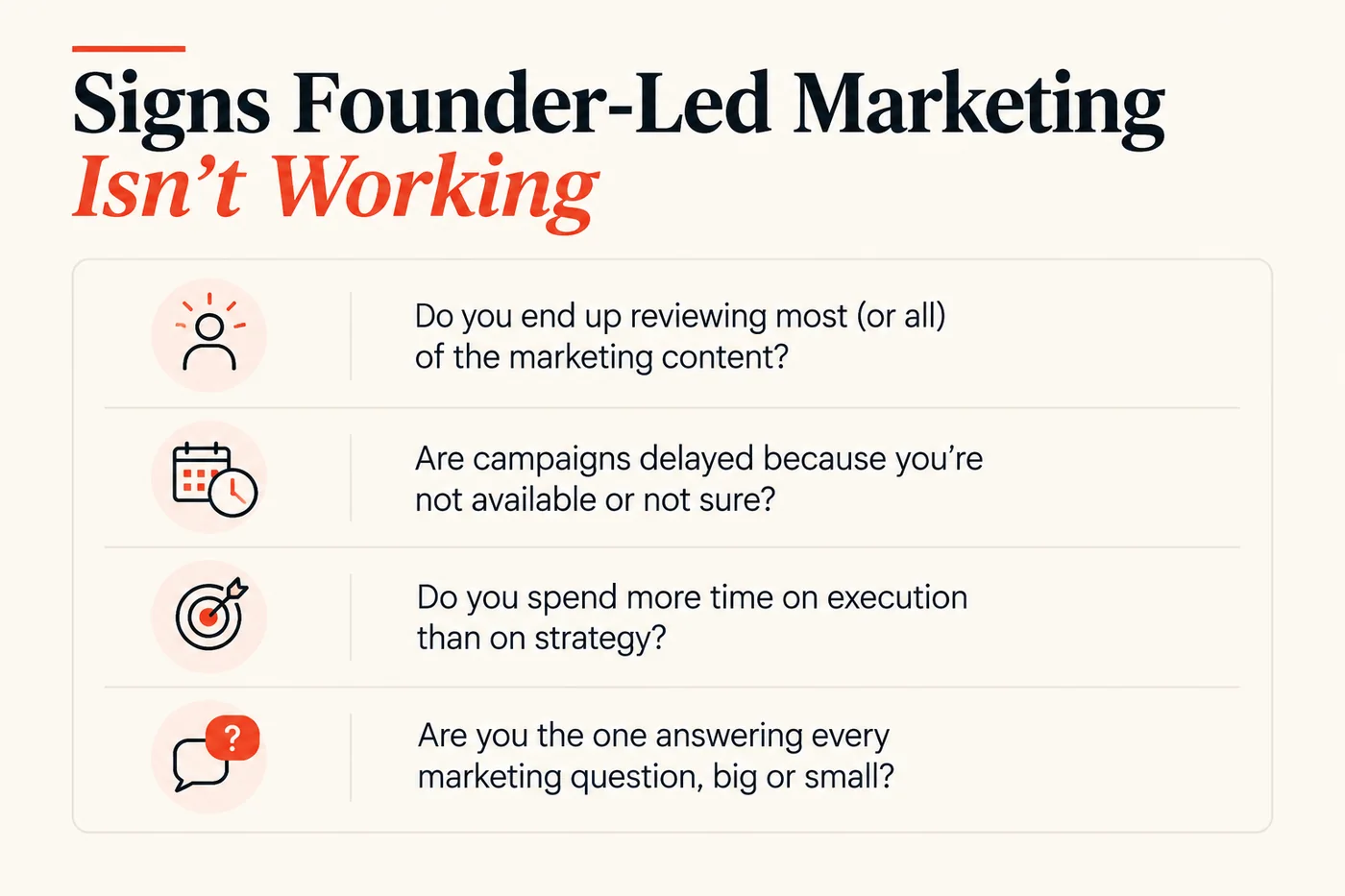
If two or more of these are true, your team is waiting on you for calls they should be making themselves. That won’t fix itself, so deal with it this quarter.
How to Fix the Founder-Led Marketing Bottleneck
To fix this bottleneck, you don’t need to remove yourself from marketing; just move your judgment into systems, people, and partners so the brand can keep scaling. Keep the major decisions with you, like what the company stands for, its limits, how you explain pricing, and how you talk about lost deals. For everything else, write down your thinking once and hand it off so your team stops asking.
We use the same approach — People, Process, Product, Platform — in every Growth Readiness Review. Your team already has good instincts. Without your reasoning in writing, they have nothing to check those instincts against.
Review the list every few months, or the same bottleneck returns with more people waiting on you.
How to Scale Founder-Led Marketing
Scaling doesn’t mean you disappear from marketing. You just stop being the checkpoint for everything. The fractional CMO at TheDIco, Maran, explains why in this reel:
4 Steps to Stop Being the Checkpoint
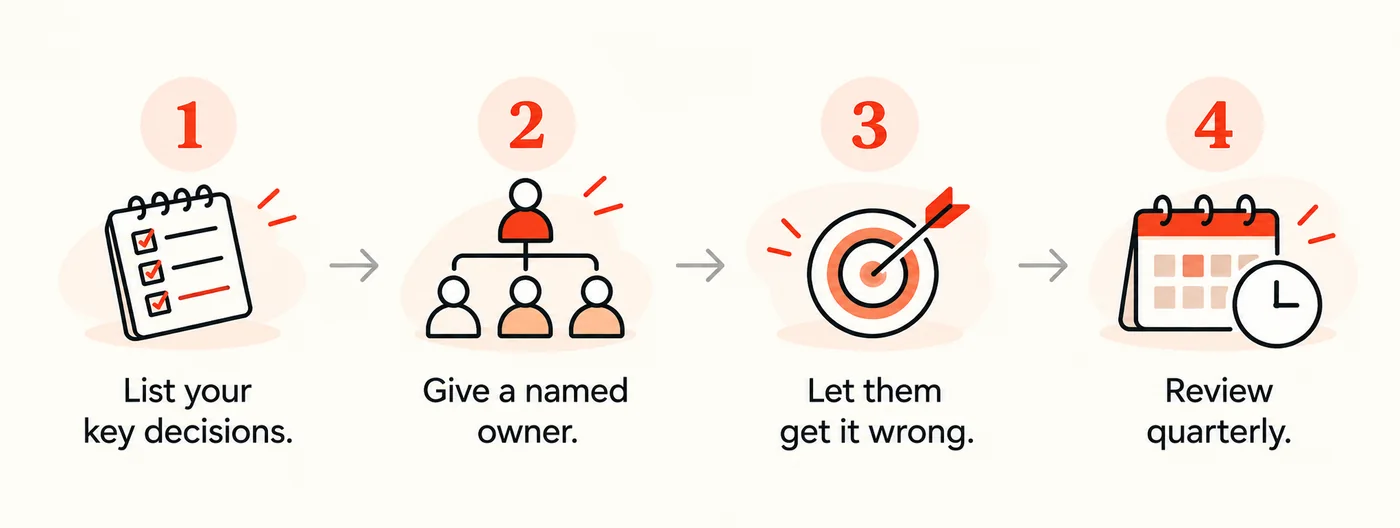
- Step 1: Write down the three or four decisions that are yours.
- Step 2: Give everything else a named owner within a month.
- Step 3: Let them get it wrong once before you step back in. That’s how people learn to own a decision.
- Step 4: Review the list every quarter. It should get shorter as your team’s judgment catches up to yours.
Frequently Asked Questions
Filed under
- Founder-led marketing
- Delegation
- Marketing leadership