
Key Takeaways
- A case study quickly narrates the client’s problem, the fix, and the results, and makes a similar buyer trust you.
- Buyers generally read them to see similar clients, their challenges, and the results they can expect.
- The guide incorporates seven easy steps to write a great case study.
Case studies are powerful for showcasing customer success. They work as “social proof” of your achievement and the value you create for customers.
As reported by the Content Marketing Institute, case studies are a core pillar of B2B content marketing; around 73% to 82% of B2B organisations include case studies in their overall strategies.
If you’re sending a proposal to a large UAE manufacturer and include two case studies of other companies in a similar industry, it instantly boosts credibility. The best part is, anyone can write a great case study; just go through these seven easy steps.
What Is a B2B Case Study? The Four Parts Every One Needs
A B2B case study tells the story of a client's problem, your solution, and the results, so a similar buyer can trust you. It includes four points: first, about the client, like its industry, size, and team involved; second, the problem and what it cost them; next, the solution and how fast it happened; and finally, the results.
A case study should work as evidence with numbers clearly mentioned. Most B2B purchases need several people to agree. A clear case study can move things forward quickly, so it keeps working after the sales call ends.
Our team has written about how to know if your marketing is working. If you want to know the gaps in your own marketing, look at our Growth Readiness Review.
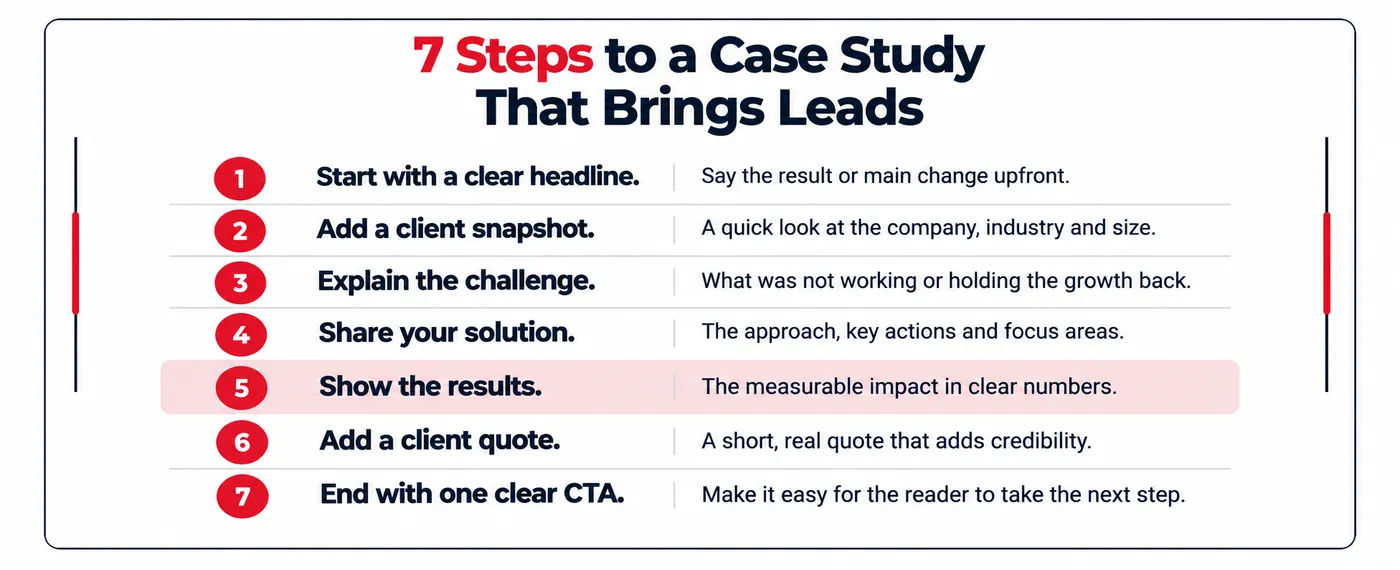
How Do You Write a B2B Case Study: Seven Easy Steps
Prepare your case study in these seven simple steps to show a buyer you can solve their problem.
Step 1: Put the result in the headline
Many firms start their case studies with the client’s name. It is not the right approach, because only people who already know the client will take an interest. Instead, your heading should be about who the client is and what change you created.
Step 2: Add a short snapshot
In the opening lines, write two or three lines about the industry, company size, and team involved. Your visitors only want to check whether this client looks like their company. Based on that, they will scroll down or leave the site.
Step 3: Describe the challenge
Here, the right way is to interview the client about their normal day before you started and what frustrated them most. Then show what the problem cost. Put all the details in the client’s words.
Step 4: Explain the solution
Next, talk about the changes, who on the client’s team was involved, and how long it took before the new way became effective. Just two to three lines are enough. Buyers do not need a feature list; they just want to picture what working with you looks like.
Step 5: Show the results through a before-and-after box
You can make a small table with figures like time taken for a task, leads per month, and deals closed. Use real numbers, mention the business results, and get the client’s written approval before you publish.
Step 6: Add a founder quote
Adding a quote in your case study builds trust with visitors. You can easily pick two or three lines from the interview and share them with the client to choose one. Prepare a clear and straightforward quote that can hook and hold buyers.
Step 7: End with one CTA
After you finish the entire document, offer one next step, like booking a call. When a reader is still comparing options, one clear button is expected to get more responses than three.
This is how to write a B2B case study. Finally, you can choose the format depending on the need. For proposals and meetings, use a one-page PDF; a web page for search; and a short video for social media.
Common Mistakes to Avoid
- Putting the client name in the headline instead of the result.
- Highlighting the features of your services and products too much.
- Not including clear numbers or results.
- Picking your most exciting win over the most relevant one.
Bottom Line
Hopefully, you have found this seven-step guide helpful and interesting. Pick one client and write one case study this week. At TheDIco, our team has put real client stories on our case studies page, so you can see how the result, the numbers, and the quote fit together.
Frequently Asked Questions
Filed under
- How to write a case study
- Case study format
- B2B case study